
How to Calculate Electricity Bill in Karachi (Step-by-Step Guide 2026)
If you live in Karachi, you know that feeling all too well — you open your electricity bill and the number makes your heart sink. Every month it seems to go higher, especially in summer when the AC runs non-stop. Many residents want to know in advance how much their bill will be, but they have no idea where to start. The good news? Calculating your electricity bill is simpler than you think once you understand how the system works.
Karachi is supplied electricity mainly through K-Electric (KE), which uses a slab-based tariff system. This means the more units you consume, the higher the rate you pay per unit. If you cross certain usage thresholds, your entire bill jumps significantly. That is why understanding electricity consumption in Karachi is so important — small habits can save you thousands of rupees every month.
In this guide, we will walk you through everything: what a unit actually is, how K-Electric calculates your bill, a step-by-step calculation method, and practical tips to bring your bill down. Whether you are a tenant in Clifton, a homeowner in Gulshan, or renting in North Karachi, this guide is for you.
What Is an Electricity Unit (kWh)?
Before diving into calculations, let us clarify one basic thing: what is an electricity "unit"? One unit equals one kilowatt-hour, which is written as kWh. It simply means using 1,000 watts of power for one hour continuously.
Here is a quick way to understand it. If you switch on a 100-watt bulb for 10 hours, it consumes 1 unit of electricity (100 watts × 10 hours = 1,000 watt-hours = 1 kWh). If you run a 1,000-watt appliance for one hour, that is also 1 unit.
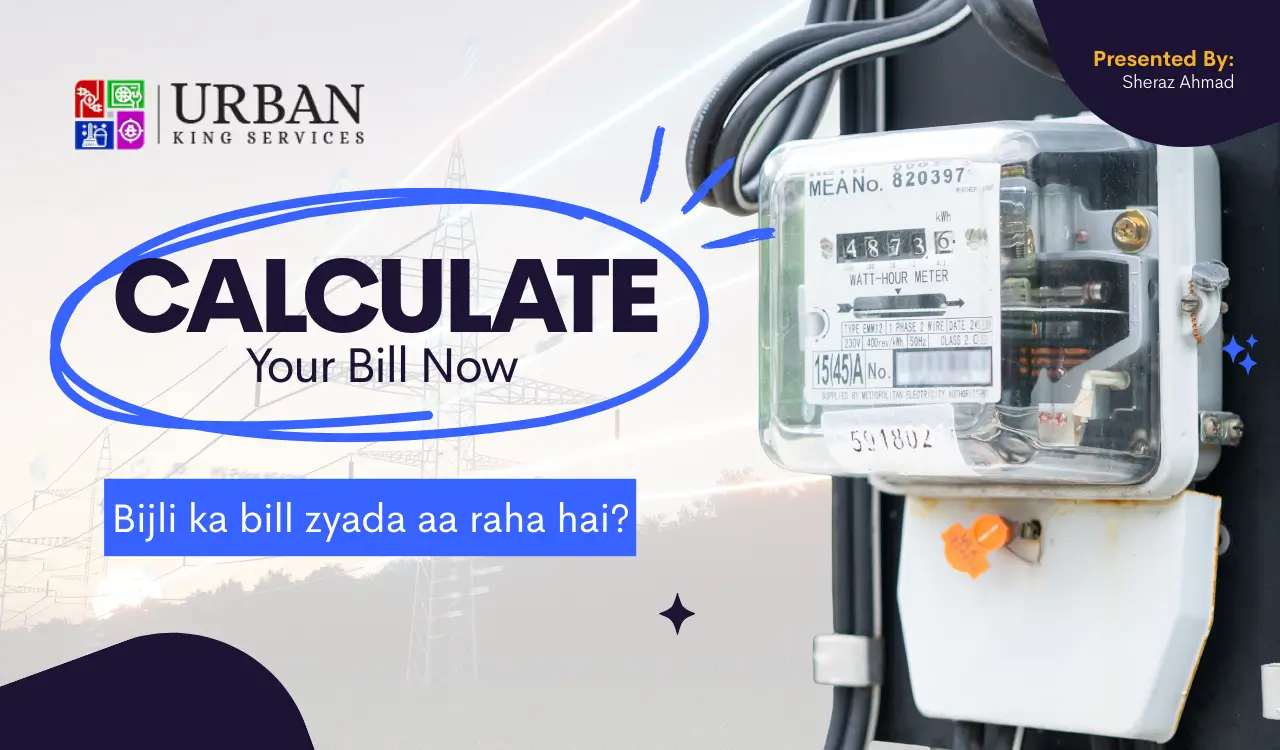
Your electricity meter at home counts these units. The difference between last month's meter reading and this month's reading gives you your total consumption in units. That figure is then multiplied by the applicable rate to calculate your bill.
How Electricity Bills Are Calculated in Karachi
K-Electric follows a tiered or slab-rate system for residential consumers. This means the electricity unit price in Karachi changes depending on how many units you use in a month. The more you consume, the higher the rate per unit becomes.
Here is a simplified version of the current residential slab rates (these are approximate 2026 figures; always check your latest bill or K-Electric's website for current rates):
- 0–100 units: Approximately Rs. 4–6 per unit (protected/lifeline consumers)
- 101–200 units: Approximately Rs. 16–19 per unit
- 201–300 units: Approximately Rs. 22–24 per unit
- 301–700 units: Approximately Rs. 26–30 per unit
- 700+ units: Approximately Rs. 30–35 per unit (highest slab)
On top of the base energy charges, K-Electric adds several other components to your monthly bill. These include a fuel price adjustment (FPA), a quarterly tariff adjustment (QTA), electricity duty (around 1.5%), a TV fee, and a GST of 17%. These additions can significantly increase the amount you see on your final bill, sometimes by 30–40% above the base energy cost.
This WAPDA electricity bill calculation approach (used across Pakistan including Karachi through K-Electric) means that a household using 400 units will pay a very different per-unit rate compared to one using 150 units. Keeping your consumption below key slab thresholds — especially 200 and 300 units — can make a massive difference.
Step-by-Step Method to Calculate Electricity Bill
You do not need to be an engineer to calculate electricity units to bill in Karachi. Follow these steps:
- Read Your Meter: Check your electricity meter and note down the current reading. Also note last month's reading (it is printed on your previous bill).
- Calculate Units Used: Subtract last month's reading from this month's reading. Example: 4,850 – 4,450 = 400 units consumed.
- Identify Your Slab: Check which slab bracket your consumption falls into based on current K-Electric tariff rates.
- Calculate Base Energy Charges: Multiply units consumed by the applicable per-unit rate for each slab. If you consume across multiple slabs, calculate each portion separately.
- Add Extra Charges: Add fuel price adjustment, electricity duty, TV fee, and GST to the base energy amount.
- Final Bill Amount: The total of all the above gives you your estimated electricity bill.
Example Electricity Bill Calculation
Let us take a practical example. Say a household in DHA Karachi consumes 350 units in July.
- First 100 units @ Rs. 5 = Rs. 500
- Next 100 units (101–200) @ Rs. 18 = Rs. 1,800
- Next 100 units (201–300) @ Rs. 23 = Rs. 2,300
- Last 50 units (301–350) @ Rs. 27 = Rs. 1,350
- Base Energy Total = Rs. 5,950
Add approximately Rs. 800–1,000 for FPA, Rs. 89 for electricity duty, Rs. 35 for TV fee, and then 17% GST on eligible charges. Your final bill could easily land around Rs. 8,000–8,500.
This is exactly why many residents are shocked when they see their July–August bills. Those extra components add up fast.
Common Home Appliances Electricity Consumption
To better manage your electricity consumption in Karachi, you need to know which appliances are eating the most units. Here is a rough guide based on typical usage:
- 1.5 Ton AC (inverter): Uses around 1.2–1.5 kWh per hour. Running it 8 hours/day for 30 days = roughly 290–360 units per month.
- 1.5 Ton AC (non-inverter): Uses 1.8–2.2 kWh per hour. Running 8 hours/day = 430–530 units per month — a massive cost.
- Refrigerator (medium size): Consumes around 30–50 units per month depending on age and model.
- Ceiling Fan: Around 0.075 kWh per hour. Running 12 hours/day = roughly 27 units per month.
- LED Bulbs (10W): Only about 3–5 units per month for 10 hours daily use. Very efficient.
- Washing Machine: Around 1 kWh per full wash cycle. Monthly usage of 20 loads = about 20 units.
Why Your Electricity Bill May Be Higher Than Expected
Sometimes your bill spikes even when you think you have been careful. Here are the most common reasons this happens in Karachi homes:
- Old or faulty wiring: Outdated electrical wiring causes power leakage and energy waste. This is surprisingly common in older Karachi buildings.
- Non-inverter ACs: If you are still running an old split AC, it could be doubling your electricity bill compared to an inverter model.
- Appliances on standby: Leaving TVs, chargers, and devices plugged in continuously adds hidden units every month.
- Overloaded circuits: Running too many appliances on the same circuit can cause inefficiency and even safety hazards.
- Meter tampering or billing errors: Sometimes billing errors occur. Always check your meter reading against your bill.
- Refrigerator with worn-out seals: A fridge with a leaking door seal works harder than it should, consuming 20–30% more electricity.
When You Should Call a Professional Electrician
Some electricity problems are not just about habits — they are about the wiring and infrastructure in your home. If you notice any of the following, do not try to fix it yourself:
- Circuit breakers tripping frequently
- Burning smell from sockets or switches
- Flickering lights despite no power issue
- Your electricity bill keeps rising with no clear reason
- Shocks or sparks near outlets or appliances
In these situations, you need a professional electrician in Karachi who can inspect your wiring, identify faults, and fix them safely. Electrical problems left unaddressed can lead to short circuits, fires, or long-term damage to your expensive appliances.
Hiring a qualified electrician for an annual home inspection is honestly one of the smartest investments a Karachi homeowner can make — especially before summer when the load on your electrical system peaks dramatically.
Use an Online Electricity Bill Estimator
Rather than doing all the math manually, why not use a tool that does it for you? If you want to quickly estimate your monthly electricity cost before your bill arrives, an online calculator is the easiest way.
Simply enter your monthly units consumed or list your appliances and their usage, and the tool instantly estimates your bill. You can try the electricity bill estimator Pakistan tool, which is designed specifically for Pakistani households and uses current K-Electric and WAPDA slab rates to give you an accurate estimate.
This tool is especially useful mid-month — if you check around the 15th and your estimated consumption is already high, you still have time to cut back on AC usage, reduce unnecessary appliance run times, and potentially drop into a lower slab, saving yourself thousands of rupees.
Tips to Reduce Electricity Bill in Karachi
Here are eight practical, proven ways to lower your electricity bill. These are not generic tips — they are tailored to Karachi's climate and household patterns:
- Switch to an inverter AC: This single change can cut your cooling costs by 40–50%. Yes, the upfront cost is higher, but it pays back within one or two summers in Karachi.
- Set your AC to 24–26°C: Every degree below 24°C increases energy consumption by about 6–8%. In Karachi's heat, 24°C still feels comfortable.
- Replace old bulbs with LEDs: A 100W incandescent bulb replaced with a 10W LED uses 90% less electricity while providing the same light. Replace all bulbs in your home this week.
- Unplug standby devices: TVs, microwaves, Wi-Fi routers, and chargers draw power even when idle. Unplugging saves 5–10% on your monthly bill.
- Use natural ventilation at night: Karachi nights are often cooler, especially near the sea. Open windows and use fans instead of running AC from midnight to dawn.
- Check refrigerator door seals: A simple test: close the fridge door on a piece of paper. If it pulls out easily, your seals need replacement. New seals are cheap and save significant energy.
- Monitor your meter weekly: Take weekly meter readings and keep track. This habit alone makes you more aware of what is consuming electricity and helps catch billing errors early.
- Get a home electrical audit: Ask a qualified electrician to assess your home's wiring and appliance loads. Old or faulty wiring can waste up to 20% of your electricity every month without you knowing.
Frequently Asked Questions
Q1: How many units does a 1.5 ton AC use in Karachi?
A: A 1.5-ton inverter AC typically uses 1.2–1.5 kWh per hour. If you run it for 8 hours daily for 30 days, that is roughly 290–360 units per month. A non-inverter 1.5-ton AC can use 430–530 units for the same usage — almost double. This is why switching to an inverter model is the most impactful thing you can do to cut bills in Karachi's long summer season.
Q2: What is the average electricity bill in Karachi?
A: For a medium-sized household (3–4 rooms) in Karachi with 1–2 ACs, the average electricity bill in summer (June–September) typically ranges from Rs. 8,000 to Rs. 18,000 or more depending on usage. In winter, it can drop to Rs. 2,500–Rs. 5,000 for the same household.
Q3: How can I reduce electricity consumption at home?
A: The most effective steps are switching to an inverter AC, replacing old bulbs with LEDs, setting AC temperatures at 24–26°C, unplugging standby devices, and getting your home's wiring inspected. Collectively, these changes can reduce your electricity bill by 30–50% over time.
Q4: Can I estimate my electricity bill before receiving it?
A: Yes, absolutely. You can use the electricity bill estimator Pakistan tool to get an accurate estimate any time during the month. Just enter your current meter reading and your previous reading, and the tool calculates your likely bill based on current K-Electric slabs.
Q5: Why does my K-Electric bill have so many extra charges?
A: Apart from energy charges, K-Electric adds a Fuel Price Adjustment (FPA), Quarterly Tariff Adjustment (QTA), electricity duty, a TV licence fee, and 17% GST. These charges are regulated by NEPRA and apply to all K-Electric consumers. They can add 30–40% on top of your base energy cost, which is why your final bill always seems higher than expected.
Final Thoughts
Managing your electricity bill in Karachi does not have to be a mystery. Once you understand how units are counted, how K-Electric calculates charges using slab rates, and which appliances are the biggest consumers, you have real power to control your costs.
Start by taking a meter reading today. Track your usage weekly. Make small changes — turn off standby appliances, set the AC a degree or two higher, replace a few old bulbs. These steps add up to significant savings over a year.
And if you suspect your wiring or electrical system is part of the problem, do not ignore it. Reach out to a professional electrician in Karachi before a small fault turns into a big, expensive problem. Stay informed, stay efficient, and take control of your electricity costs in 2026.